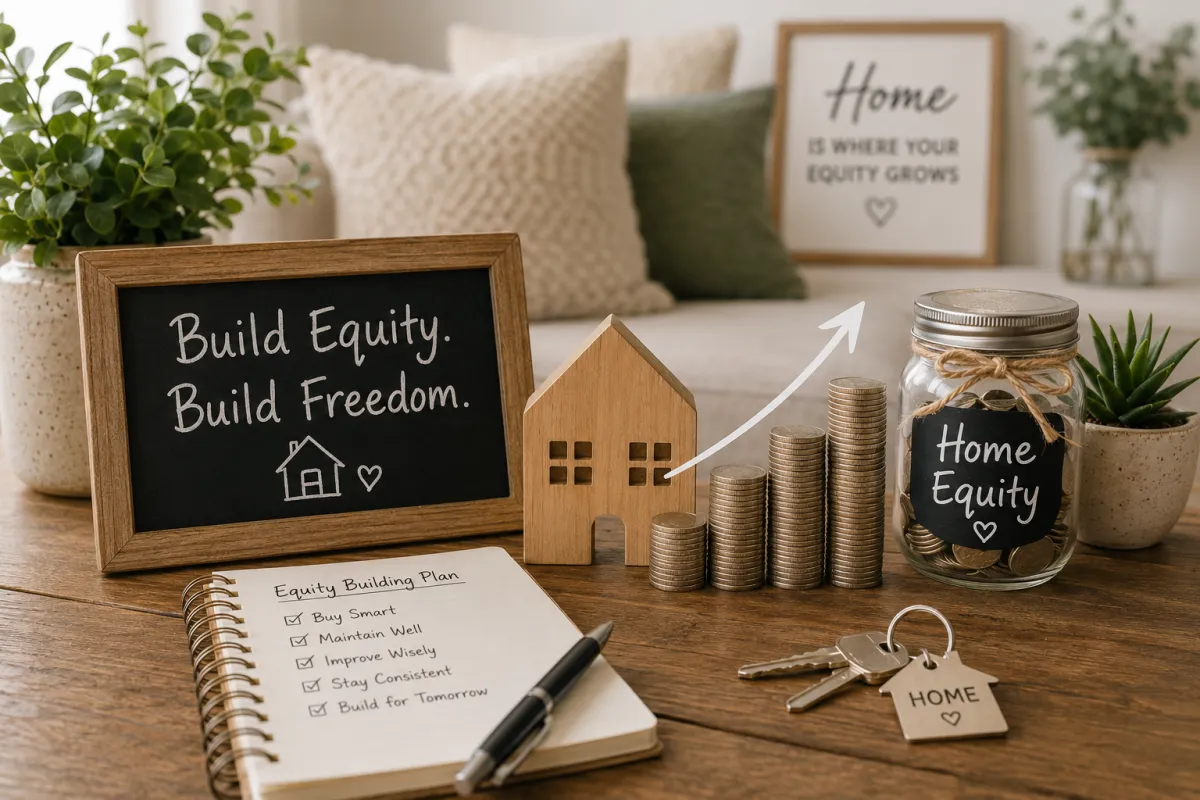
How to Build Equity Faster in the OKC Metro: Smart, Practical Ways to Grow Your Home’s Value
How to Build Equity Faster in the OKC Metro: Smart, Practical Ways to Grow Your Home’s Value
Buying a home is a big deal.
Building equity after you buy? That is where homeownership really starts to become powerful.
Equity is one of those real estate words people hear all the time, but it does not always get explained in a way that feels useful. It can sound like something only investors, lenders, or finance people talk about. But equity matters for everyday homeowners too.
It matters when you want to sell.
It matters when you want to refinance.
It matters when you want to move up.
It matters when life changes and you need options.
It matters when you are trying to build long-term stability for your family.
In the Oklahoma City metro, where home prices, property taxes, insurance costs, school boundaries, commute patterns, new construction, acreage, and neighborhood demand can all vary from one area to the next, understanding equity can help you make wiser decisions from the beginning.
The goal is not to turn your home into a project you obsess over every weekend.
The goal is to understand how equity works, what actually helps build it, and what can quietly work against you if you are not paying attention.
Because the truth is, you do not build equity faster by guessing.
You build it by making thoughtful choices.
What Equity Actually Means
Home equity is the difference between what your home is worth and what you owe on it.
For example, if your home is worth $275,000 and your mortgage balance is $225,000, you have about $50,000 in equity.
That equity can grow in a few different ways.
Your home’s value can increase over time.
Your mortgage balance can go down as you make payments.
You can make smart improvements that increase the home’s value.
You can avoid over borrowing against the house.
You can buy wisely from the start.
Equity is not always cash you can touch right away. It is not the same thing as money sitting in your checking account. But it is still part of your financial picture.
It is ownership.
It is breathing room.
It is the difference between feeling stuck and having choices.
Why Equity Matters So Much
Equity gives homeowners options.
If you sell, equity can help cover selling costs, pay off the mortgage, and give you money toward your next home.
If you refinance, equity can affect loan options.
If you need to make improvements, equity may play a role in whether certain financing options are available.
If life changes unexpectedly, equity can give you more flexibility.
That is one reason I care so much about helping buyers think beyond the pretty photos and the monthly payment. A home should work for your life now, but it should also make sense for your future.
A home that stretches you too thin may technically be affordable on paper, but it can make it harder to maintain the property, make repairs, or stay long enough to build equity.
A home that needs work may be a good opportunity, but only if the repairs, location, financing, and resale picture make sense.
A home in the right area, bought with a smart plan, maintained well, and improved thoughtfully can become one of the strongest financial foundations a family has.
Equity in the OKC Metro Is Local
Real estate is always local.
That is especially true across the Oklahoma City metro.
A home in Edmond may build equity differently than a similar-priced home in Yukon, Mustang, Choctaw, Moore, Norman, Piedmont, Harrah, Tuttle, Spencer, or Oklahoma City. Not because one is automatically better than the other, but because each area has its own demand patterns, buyer expectations, price points, property types, commute appeal, school district pull, tax picture, and growth story.
In some parts of the metro, buyers are drawn to new construction, schools, shopping, and neighborhood amenities.
In other areas, buyers are looking for land, privacy, shops, barns, storm shelters, room for animals, or a quieter pace.
Some neighborhoods attract first-time buyers because of affordability.
Some attract relocating families because of schools and commute.
Some attract investors because rental demand is strong.
Some attract move-up buyers because of lot size, layout, or newer homes.
That matters because equity is not just about what you do inside the house. It is also about where the home sits and how future buyers will see it.
A beautiful upgrade in the wrong price range may not return what you expect.
A simple improvement in the right neighborhood may make the home much more competitive.
That is why building equity faster starts before you even buy.
Step One: Buy the Right Home, Not Just the Prettiest One
One of the biggest equity-building decisions happens at the beginning: what you buy.
A good purchase is not just about finding a house you love. It is about finding a house that makes sense for your budget, your life, and your long-term plans.
When I help buyers look at homes, I want them to pay attention to more than the listing photos.
I want them to think about:
Is the home priced fairly for the area?
How does it compare to similar homes nearby?
Is the neighborhood stable or growing?
Are there major repairs coming soon?
Is the layout functional?
Will future buyers understand the value?
Are there things that can be improved over time?
Is the home over-improved for the neighborhood?
Are property taxes and insurance manageable?
Does the home give you room to breathe financially?
That last one matters more than people realize.
A house that eats up every bit of your monthly budget can make equity-building harder. Not because the house is bad, but because you may not have room for maintenance, repairs, improvements, or unexpected expenses.
Sometimes the smartest equity move is buying a home that gives you margin.
Margin is what lets you maintain the home well.
Margin is what lets you replace the water heater before it becomes a crisis.
Margin is what lets you paint, update flooring, improve curb appeal, or add function.
Margin is what keeps a home from becoming a burden.
Step Two: Understand Forced Equity vs. Market Equity
There are two basic ways equity grows.
The first is market equity.
That happens when your home increases in value because the market around it changes. Maybe demand grows. Maybe inventory stays low. Maybe the area becomes more desirable. Maybe nearby development improves access, shopping, schools, or employment.
You do not fully control market equity.
You can benefit from it, but you cannot force it.
The second is forced equity.
That is the equity you create through intentional choices.
Paying down your mortgage.
Making smart improvements.
Improving condition.
Fixing deferred maintenance.
Increasing function.
Adding usable space.
Improving curb appeal.
Protecting the home from damage.
Forced equity is where homeowners have more control.
It does not mean every project adds dollar-for-dollar value. It does not mean every upgrade is worth it. But it does mean the way you care for and improve the home can affect what it is worth and how buyers see it later.
Step Three: Pay a Little Extra Toward Principal When You Can
One of the simplest ways to build equity faster is to pay down the mortgage balance sooner.
That does not always mean making huge extra payments.
Sometimes it means adding a small amount to your principal each month.
Even an extra $50, $100, or $200 toward principal can help reduce the balance faster over time.
The important part is making sure the extra money is applied to principal, not just held as a future payment. You would want to confirm with your lender or loan servicer how to do that correctly.
Some homeowners make one extra payment per year.
Some round up their payment.
Some apply bonuses, tax refunds, or occasional extra money toward principal.
Some choose a biweekly payment plan, but you have to be careful with third-party services or fees. Always verify how the payments are handled.
This strategy is not flashy, but it is powerful because it works quietly in the background.
However, I always want people to hear this part too: do not send every extra dollar to your mortgage if you do not have emergency savings.
A home needs maintenance. Life happens. Cars break. Kids need things. Jobs change. Storms happen. Deductibles happen.
Building equity should not leave you cash-poor.
The best plan is balanced.
Pay down debt wisely, but keep enough savings to protect your home and your household.
Step Four: Protect the Home You Already Bought
The fastest way to lose equity is to ignore maintenance.
I know maintenance is not exciting. Nobody is usually thrilled to spend money on gutters, caulk, drainage, HVAC service, or plumbing repairs.
But maintenance protects value.
A home can gain market value and still lose buyer confidence if it has been neglected.
In Oklahoma, maintenance matters because our homes deal with wind, hail, heat, freezes, heavy rain, shifting soil, red dirt, pests, and storm damage.
A homeowner who keeps up with maintenance is protecting equity even when it does not feel like an upgrade.
Important equity-protecting maintenance includes:
Cleaning gutters.
Keeping water draining away from the foundation.
Changing HVAC filters.
Servicing the HVAC system.
Watching for roof damage after storms.
Keeping exterior paint and caulk in good condition.
Checking under sinks for leaks.
Maintaining fences, gates, and decks.
Managing pests.
Keeping trees trimmed away from the roof.
Testing smoke and carbon monoxide detectors.
Knowing where the water shutoff is.
Keeping records of repairs and service.
This is not about perfection.
It is about catching small things before they turn into expensive things.
A $10 tube of caulk can prevent water damage.
A clean gutter can protect fascia and foundation drainage.
A serviced HVAC system may last longer.
A roof checked after a hailstorm may prevent hidden leaks from getting worse.
Maintenance is not glamorous equity.
But it is real equity protection.
Step Five: Focus on Improvements That Actually Matter
Not all upgrades build equity the same way.
Some improvements are mostly for your enjoyment.
Some help resale.
Some help function.
Some protect the home.
Some are beautiful but may not return as much as you hoped.
That does not mean you should never make a personal-choice upgrade. It is your home. You should enjoy it.
But if the goal is building equity faster, you want to think carefully about which projects matter most in your market.
In the OKC metro, buyers often notice:
Clean curb appeal.
A well-maintained roof.
A functional HVAC system.
Updated flooring.
Fresh neutral paint.
Clean kitchens and bathrooms.
Good lighting.
A functional floor plan.
Storage.
Storm safety features.
Energy efficiency.
Well-maintained outdoor spaces.
A usable backyard.
A clean garage.
A cared-for exterior.
For acreage properties, buyers may also care about fencing, shops, barns, outbuildings, drainage, well and septic condition, gravel drives, gates, and usable land.
For older homes, buyers may care about electrical updates, plumbing condition, foundation stability, windows, insulation, roof age, and whether the character has been preserved.
For new construction, buyers may care about blinds, fencing, gutters, landscaping, storage, storm shelter options, and whether the home still feels fresh and maintained after the first few years.
The best improvements are usually the ones that make the home feel cared for, functional, and easy to say yes to.
Step Six: Do the Boring Improvements First
This is where I may sound like the practical mom in the room, but I am going to say it anyway.
Do not spend your entire budget on pretty upgrades if the home has serious maintenance needs.
A beautiful kitchen backsplash does not cancel out a roof leak.
New floors do not fix poor drainage.
A gorgeous bathroom mirror does not repair failing caulk around the tub.
Buyers may love pretty finishes, but inspectors look at systems.
Appraisers look at condition and comparable value.
Insurance companies care about risk.
Future buyers care about confidence.
So before chasing the fun upgrades, look at the boring ones:
Roof.
HVAC.
Water heater.
Electrical.
Plumbing.
Drainage.
Foundation.
Windows.
Exterior paint or siding.
Gutters.
Safety issues.
Moisture issues.
Those items may not be as exciting as a design project, but they protect the value of the home.
A well-maintained home with simple finishes can often feel better to a buyer than a flashy home with hidden problems.
Step Seven: Use Paint Strategically
Paint is one of the most affordable ways to change how a home feels.
It can make a home feel cleaner, brighter, calmer, and more updated.
But the key is choosing colors wisely.
For equity and resale, you usually want colors that make rooms feel open, warm, and easy to imagine living in. That does not mean everything has to be plain white. It means the colors should support the home, not fight it.
In many OKC-area homes, soft warm neutrals, muted greens, creamy whites, gentle grays, and natural tones can feel inviting without being too personal.
Paint can help with:
Dark rooms.
Scuffed walls.
Dated colors.
Overly bold bedrooms.
Tired trim.
Older cabinets, if done correctly.
Exterior refreshes.
Front doors.
However, bad paint work can hurt more than help.
Drips, poor prep, peeling paint, painted-shut windows, sloppy trim, or paint over damaged surfaces can make buyers wonder what else was rushed.
The trick is not just painting.
It is preparing well and choosing intentionally.
Step Eight: Improve Curb Appeal Without Overdoing It
Curb appeal matters because buyers start forming opinions before they ever walk inside.
That does not mean you need expensive landscaping.
Simple often wins.
In the OKC metro, strong curb appeal can come from:
A clean yard.
Trimmed shrubs.
Fresh mulch.
A clean porch.
A painted front door.
Working exterior lights.
Clean windows.
A visible house number.
A repaired fence.
A clean driveway.
Healthy grass where possible.
Seasonal flowers in simple planters.
A tidy entry.
If the home looks cared for outside, buyers often feel more confident going inside.
For sellers, this can matter a lot.
For homeowners building equity over time, curb appeal is one of those manageable areas where small, steady improvements add up.
Just be careful not to overbuild landscaping for the neighborhood or create a yard that future buyers see as too much work.
The goal is welcoming and maintained.
Not overwhelming.
Step Nine: Make the Home More Functional
Function builds value.
Sometimes homeowners think equity only comes from making a home prettier. But function matters deeply.
A home that works well for real life is easier to love and often easier to sell.
Functional improvements may include:
Adding storage.
Improving pantry organization.
Adding garage shelving.
Creating a better laundry area.
Improving lighting.
Adding ceiling fans.
Replacing broken blinds.
Improving closet systems.
Adding a mudroom bench or drop zone.
Creating a small office space.
Improving the backyard for pets or kids.
Adding fencing, where appropriate.
Making the entry more usable.
Improving traffic flow.
In today’s market, many buyers care about how a home supports daily life.
People work from home.
Kids need homework space.
Families need storage.
Pet owners need yards and durable flooring.
Multigenerational families may need flexible rooms.
A beautiful home that does not function can be harder to live in.
A simple home that works well can feel like a blessing.
Step Ten: Be Smart With Kitchen and Bathroom Updates
Kitchens and bathrooms matter, but they do not always need full remodels.
Sometimes homeowners spend far more than they need to.
A full kitchen renovation can be wonderful if the home, neighborhood, budget, and resale picture support it. But smaller updates can also make a big difference.
Consider:
New cabinet hardware.
Updated lighting.
Fresh paint.
Clean grout.
A new faucet.
A better sink.
Updated counters, if needed.
New appliances, if the old ones are failing or very dated.
Improved storage.
A cleaner backsplash.
In bathrooms:
Fresh caulk.
Clean grout.
Updated mirrors.
Modern lighting.
New faucets.
Fresh paint.
Updated towel bars.
A better vanity, if needed.
New toilet, if old or inefficient.
A deep clean.
The goal is not always luxury.
It is clean, functional, and cared for.
In many OKC metro homes, buyers respond well to homes that feel move-in ready without being overdone.
Step Eleven: Think Twice Before Over-Improving
One of the biggest equity mistakes homeowners make is over-improving beyond what the neighborhood supports.
A luxury renovation in a modest neighborhood may not return what you expect.
A highly personal upgrade may be expensive but not valuable to most buyers.
A pool may be wonderful for one family and a maintenance concern for another.
A converted garage may give more living space but reduce appeal for buyers who want parking and storage.
A bedroom removed to create a giant closet may hurt resale if the home loses a bedroom count buyers need.
A bold design choice may be beautiful to you but distracting to others.
This is not about making your home boring.
It is about understanding the difference between improvements for your life and improvements for resale.
Both are valid.
But they are not always the same.
Before spending a lot of money, ask:
Will this improve daily function?
Will future buyers value it?
Does the neighborhood support the cost?
Am I fixing a real problem or just chasing a trend?
Will this make the home easier or harder to sell later?
Could a smaller update accomplish the same goal?
That kind of thinking protects equity.
Step Twelve: Keep Documentation for Everything
If you want to build and protect equity, keep records.
This is one of the simplest things homeowners can do, and many skip it.
Keep receipts and records for:
Roof repairs or replacement.
HVAC service.
Water heater replacement.
Electrical work.
Plumbing repairs.
Foundation work.
Drainage improvements.
Pest control.
Appliance purchases.
Flooring updates.
Paint colors.
Window replacement.
Fence repairs.
Storm shelter installation.
Septic service.
Well service.
Major landscaping.
Permits, when applicable.
Warranties.
Manuals.
Insurance claims.
When you sell someday, documentation helps tell the story of the home.
It gives buyers confidence.
It helps your agent market the improvements.
It may help with tax basis records.
It keeps you from trying to remember what was done five years ago.
A home binder may not feel exciting, but it can be incredibly valuable.
Step Thirteen: File Your Oklahoma Homestead Exemption
This is not exactly equity in the same way as paying down your mortgage or improving the home, but it matters for your homeowner budget.
If the home is your primary residence in Oklahoma, you may qualify for homestead exemption. This can reduce the taxable assessed value of your home and save you money each year.
Why does that matter for equity-building?
Because every dollar you save on carrying costs can help you maintain the home, build savings, pay down principal, or plan improvements.
This is one of those simple steps homeowners should not skip.
After closing, check with your county assessor for the correct process and deadline.
In the OKC metro, that may mean Oklahoma County, Cleveland County, Canadian County, Logan County, Grady County, or another nearby county depending on where the home is located.
Do not assume it happens automatically.
Ask.
File.
Keep proof.
Step Fourteen: Understand Property Taxes and Insurance
Equity is not just about the home’s value.
It is also about whether the home remains affordable enough for you to keep and care for it.
In Oklahoma, property taxes are often lower than many states, but they still vary by county, city, school district, and millage rate.
Insurance can also vary, especially with roof age, location, storm risk, deductibles, claims history, and coverage type.
Two homes with the same purchase price can have different monthly payments because taxes and insurance are different.
That matters because a manageable monthly payment helps you stay in the home longer.
And time is one of the biggest equity builders.
If your payment is too tight from the beginning, you may be more likely to defer maintenance or sell before the home has had time to build value.
So when you are buying, look beyond price.
Look at the whole monthly picture.
Mortgage.
Taxes.
Insurance.
HOA dues.
Utilities.
Maintenance.
Repairs.
Commute.
That is how you make a smart equity decision.
Step Fifteen: Consider Energy Efficiency Improvements
Energy efficiency can help in a few ways.
It can make the home more comfortable.
It can reduce utility costs.
It can improve buyer appeal.
It can help older homes feel more livable.
It may qualify for certain programs or credits depending on your situation and timing.
Practical efficiency improvements may include:
Air sealing.
Attic insulation.
Weatherstripping.
Better windows, if needed.
Programmable or smart thermostats.
HVAC maintenance.
Duct sealing.
Energy-efficient appliances.
LED lighting.
Water heater improvements.
Improved ventilation.
In Oklahoma, where summers are hot and winters can still bring hard freezes, comfort matters.
A home that stays comfortable without extreme utility bills can be attractive.
But like everything else, do not just throw money at upgrades without a plan.
Start with the basics.
Seal leaks.
Check insulation.
Service HVAC.
Review utility bills.
Then decide what makes sense.
Step Sixteen: Use Renovation Financing Carefully
Some buyers use renovation loans or improvement financing to buy a home that needs work.
This can be helpful in the right situation.
Programs such as renovation-style mortgage products may allow eligible borrowers to finance certain improvements into the loan, depending on lender guidelines, property type, project scope, and borrower qualifications.
This can create opportunity when a home has good bones but needs updates.
But it is not something to enter casually.
Renovation financing can involve contractor bids, appraisals based on completed value, lender oversight, timelines, inspections, and extra paperwork.
It can be a great tool for the right buyer and the right property.
It can also be stressful if the budget is tight, the contractor is unreliable, or the scope of work is unclear.
If your goal is building equity, a fixer-upper can work when:
You buy at the right price.
The repairs are realistic.
The neighborhood supports the improved value.
You have the right financing.
You have contingency money.
You understand the timeline.
You do not ignore inspection concerns.
You have trusted professionals.
A fixer-upper is not automatically a deal.
A move-in ready home is not automatically overpriced.
The numbers have to make sense.
Step Seventeen: Avoid Equity Killers
There are things that can quietly work against your equity.
Some are obvious. Some are not.
Ignoring water problems
Water is one of the fastest ways to damage a home. Roof leaks, plumbing leaks, poor drainage, and moisture problems should be addressed quickly.
Deferring maintenance
Small repairs can turn into big repairs.
Making overly personal renovations
Very specific design choices may not appeal to future buyers.
Removing useful features
Think carefully before removing bedrooms, closets, garages, storage, or functional spaces.
Overborrowing against the home
Home equity loans or lines of credit may be useful in some situations, but using equity carelessly can reduce your financial cushion.
Choosing the cheapest contractor without checking quality
Bad work can cost more to fix later.
Not pulling permits when required
Unpermitted work can create problems when selling, refinancing, or insuring.
Letting insurance coverage fall behind
If your coverage does not match your needs, a storm or loss can damage more than the house. It can damage your financial plan.
Selling too quickly without understanding costs
Selling a home comes with costs. If you sell before building enough equity, you may have less room than expected after commissions, closing costs, repairs, concessions, payoff, and moving expenses.
Equity grows best when the home is cared for and the financial decisions are thoughtful.
Step Eighteen: Stay Long Enough When You Can
Time is one of the most underrated equity builders.
In the early years of a mortgage, a larger portion of the payment often goes toward interest instead of principal. Over time, more of the payment begins reducing the loan balance.
At the same time, if the market appreciates, your home may gain value.
That combination can help equity grow.
This is why buying with a realistic time horizon matters.
If you know you may need to move in one or two years, we need to think carefully about whether buying makes sense, what type of home to buy, and how resale might look.
If you can stay longer, maintain the home, and avoid overextending your budget, you often give equity more room to grow.
Of course, life does not always follow the plan.
Jobs change.
Families grow.
Divorce happens.
Health needs change.
Parents need help.
Budgets shift.
But when possible, buying a home that can work for more than one season of life can help protect your equity.
Step Nineteen: Think Like a Future Buyer
One of the best ways to build equity is to occasionally walk through your home like a future buyer.
Not in a critical, shame-filled way.
Just honestly.
Ask yourself:
What would a buyer notice first?
Does the home feel clean and cared for?
Are there obvious repairs I keep ignoring?
Does the yard feel maintained?
Does the front door feel welcoming?
Are there strong odors?
Is the lighting warm and functional?
Are there rooms that feel unfinished?
Is storage working?
Would the inspection bring up preventable issues?
Are there improvements I should document?
Would this home feel easy to say yes to?
You do not have to live in a staged home.
You live in a real home.
But the way a home feels over time does affect value.
A cared-for home has a different energy.
Buyers can feel it.
Step Twenty: Know When to Ask Before You Spend
Before making a major improvement, ask for local guidance.
Not every project is worth the same in every neighborhood.
A project that makes sense in Edmond may not make the same sense in Spencer.
A project that helps resale in Yukon may not matter as much on acreage near Harrah.
A project that is expected in one price range may be unnecessary in another.
A seller in Moore may need a different prep plan than a seller in Piedmont.
A rural property near Choctaw may need different priorities than a newer home in Mustang.
That is why I like helping homeowners think through improvements before they spend money.
Sometimes the answer is, “Yes, that would help.”
Sometimes it is, “Do a smaller version.”
Sometimes it is, “Fix the maintenance issue first.”
Sometimes it is, “You will enjoy it, but do not expect it to return dollar-for-dollar.”
Sometimes it is, “Save that money for your next home.”
Good guidance can save you from expensive guesswork.
A Simple Equity-Building Plan for OKC Metro Homeowners
If you are wondering where to start, keep it simple.
First, protect the home.
Handle maintenance. Watch for water. Service major systems. Keep the exterior sealed. Check the roof after storms. Keep records.
Second, protect your budget.
File homestead exemption if eligible. Understand taxes and insurance. Build a maintenance fund. Avoid taking on too much debt.
Third, pay down the mortgage wisely.
Add extra principal when you can, but not at the expense of emergency savings.
Fourth, improve function.
Storage, lighting, clean paint, flooring, curb appeal, and practical spaces can make a home feel better and perform better.
Fifth, choose upgrades carefully.
Do not over-improve. Do not chase every trend. Focus on what future buyers in your area will actually value.
Sixth, document everything.
Receipts, warranties, permits, service records, paint colors, and upgrades all matter.
Seventh, ask before big projects.
Local advice can help you avoid wasting money.
That is how equity-building becomes less overwhelming.
Not one giant project.
Just a series of thoughtful decisions.
My Honest Take
Building equity faster is not about turning your home into a constant construction zone.
It is not about chasing every trend.
It is not about spending money just because someone online said a certain upgrade has a great return.
It is about stewardship.
Buying wisely.
Maintaining consistently.
Improving thoughtfully.
Paying down debt when you can.
Keeping records.
Understanding the local market.
Making sure the home supports your real life and your future plans.
In the OKC metro, equity can look different depending on where you are. A family in Edmond may be thinking about schools, resale, and updates. A buyer in Yukon or Mustang may be looking at new construction and growth. Someone in Choctaw, Harrah, or Tuttle may be thinking about acreage, shops, privacy, and outbuildings. A homeowner in Oklahoma City may be looking at affordability, neighborhood demand, and smart improvements. A seller in Moore, Norman, Piedmont, or Spencer may need to think about condition, presentation, and what buyers in that area expect.
There is no one-size-fits-all answer.
But there is a wise way to approach it.
Slow down.
Look at the whole picture.
Make a plan.
Care for what you own.
And when you are not sure which improvement actually matters, ask before you spend.
That is what thoughtful real estate guidance is for.
Disclaimer
This blog is for general educational purposes only and is not financial, tax, legal, insurance, construction, appraisal, or lending advice. Home values, equity, loan options, tax outcomes, insurance costs, and improvement returns can vary based on your specific property, location, market conditions, lender guidelines, contractor work, and personal financial situation.
Before making major financial decisions, extra mortgage payments, renovations, tax decisions, insurance changes, or resale plans, please consult the appropriate professionals, such as a licensed lender, tax professional, insurance agent, attorney, contractor, appraiser, or financial advisor.
As your REALTOR®, my role is to help you understand the local real estate picture, ask better questions, and make informed decisions with the right professionals involved.
Thoughtfully, Guiding You Home
If you're navigating buying, selling, or relocating to the OKC metro, I'd love to be your local guide through it, not just the transaction, but the whole picture.
Reach out anytime, no pressure, just honest answers.
405-436-3165
[email protected]
Get Your Free Moving to Oklahoma Guide:
https://susanatlime.com/moving-to-oklahoma-relocation-guide
Get Your Free Listing Launch System:
https://susanatlime.com/seller/launch/system
Get Your Free Buyer Roadmap:
https://susanatlime.com/home-buying-roadmap
Susan Honaker, REALTOR® | Lime Realty
Serving Edmond, OKC, Choctaw, Moore, Yukon, Mustang & the greater OKC metro.
Susan At Lime