
Protecting Your Home From Deed Theft in Oklahoma
Protecting Your Home From Deed Theft in Oklahoma
A Conversation Every Oklahoma Homeowner Needs to Have
There are certain things most homeowners never even think about having to worry about.
A pipe bursting? Sure.
Storm damage? Absolutely.
Roof repairs? Unfortunately, yes.
Someone trying to steal ownership of your home?
Most people do not even realize that is possible until they hear the words “deed theft” for the first time at a closing table.
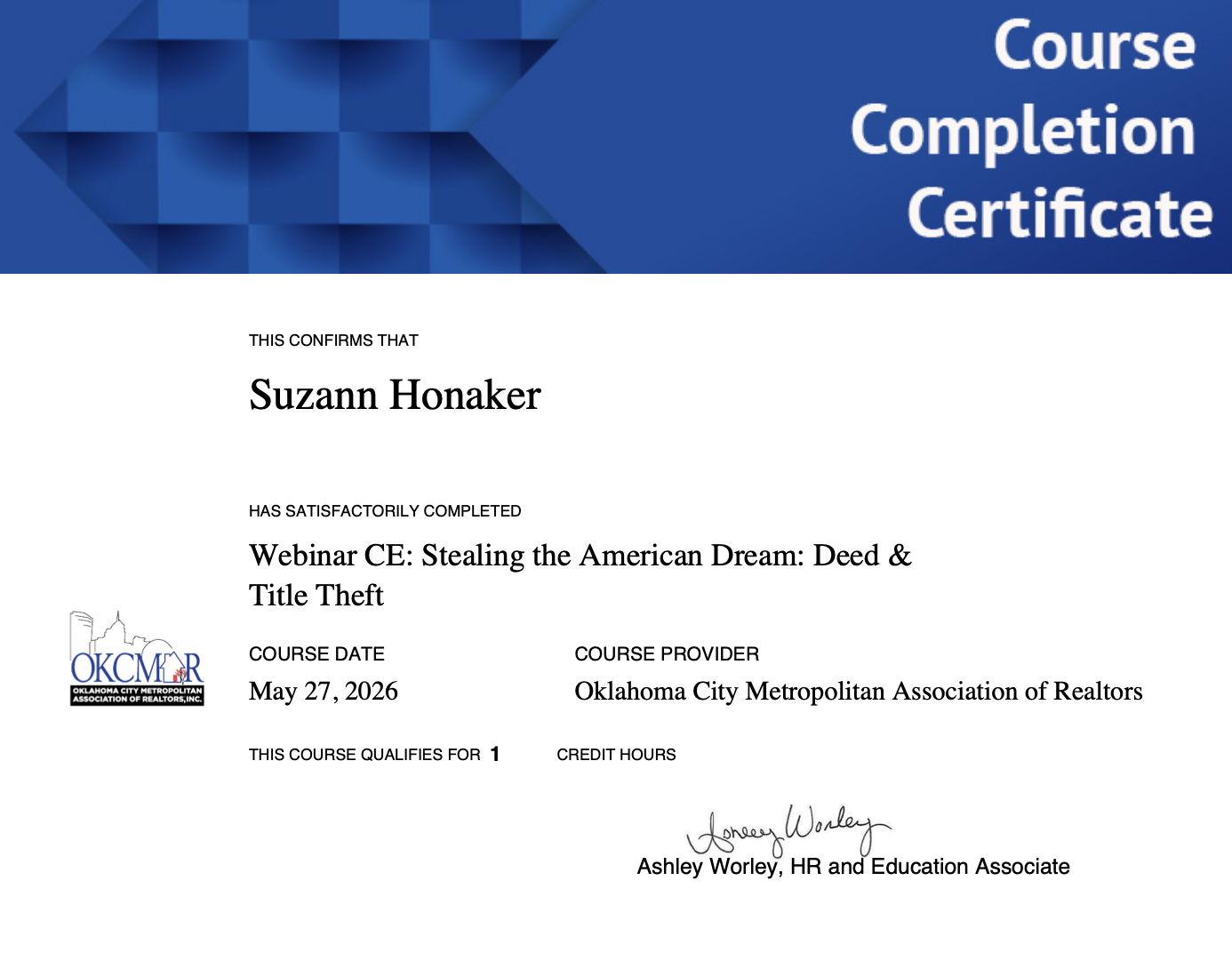
Honestly, that is exactly why I wanted to write this blog. I just recently took a class from OKCMAR learning all of this information and I wanted to share it with homeowners.
Here in Oklahoma, deed fraud and property fraud have become enough of an issue that the Oklahoma Real Estate Commission now requires a specific form at closing explaining the signs and risks of deed theft to homeowners.
That means this is no longer one of those “that would never happen here” conversations.
It is happening often enough that Oklahoma is actively trying to educate homeowners before something happens instead of after.
So let’s walk through this together in a simple, practical way.
Because the goal is not to scare homeowners.
The goal is to help you protect one of the biggest investments your family will ever make.
First, What Exactly Is Deed Theft?
In simple terms, deed theft is when someone fraudulently tries to transfer ownership of your property without your permission.
That can happen through:
Forged signatures
Fake paperwork
Identity theft
Fraudulent liens
Fake quitclaim deeds
Fraudulent mortgage filings
Basically, someone attempts to make it look legally on paper like they own your property, when they absolutely do not. Unfortunately, criminals have gotten more sophisticated. Years ago, this kind of fraud was much harder to pull off. Now, a lot of property information is public online.
Things like:
Property owner names
Addresses
Legal descriptions
County filings
Mortgage information
When scammers combine that information with identity theft and forged documents, problems can happen surprisingly fast.
Why This Matters So Much
For most people, a home is not just “real estate.”
It is:
Your safe place
Your memories
Your family’s future
Years of hard work
Stability
Security
That is why deed fraud can become so emotionally overwhelming for homeowners.
And one of the scariest parts?
Many homeowners do not discover the issue until months later.
Sometimes people only find out when:
They try to sell the home
A lender contacts them
Tax notices stop arriving
A collection notice shows up
Someone claims ownership
A lien appears on the property
That is exactly why monitoring your property records matters.
What Is a Fraudulent Lien?
Let’s talk about liens for a second because this is one area homeowners get confused about.
A lien is a legal claim against property connected to a debt. Some liens are completely legitimate, like:
Mortgages
Property taxes
Mechanic’s liens from unpaid contractors
Fraudulent liens can also happen. Someone may illegally file paperwork claiming:
You owe money
They have ownership rights
There is a debt attached to your property
Even if the claim is fake, it can still create major headaches when:
Refinancing
Selling
Pulling equity
Transferring ownership
That is why catching these filings early is so important.
Why Oklahoma Homeowners Need To Pay Attention
This has become enough of an issue that the Oklahoma Real Estate Commission now requires agents to have buyers sign a deed theft notice at closing.
That form explains:
What deed theft is
Warning signs
Risks to homeowners
Steps homeowners can take to protect themselves
Honestly, I think this education is incredibly important because most people simply have never been taught about this. Homeowners are used to thinking about:
Home insurance
Tornadoes
Maintenance
Interest rates
Not someone trying to fraudulently file paperwork against their property.
The Good News: There ARE Ways To Protect Yourself
Now here is the encouraging part. There are actually several simple steps Oklahoma homeowners can take that dramatically increase the chances of catching fraud early. One of the BEST tools available right now is property fraud alerts.
Step 1: Sign Up for Property Fraud Alerts
This is probably the single easiest thing homeowners can do. Many Oklahoma counties now offer free property fraud alert systems. These systems notify you when documents are recorded involving your name. That means if someone files:
A deed
A lien
Mortgage paperwork
Ownership transfers
Certain legal filings
you may receive an alert.
Now, these systems do NOT stop fraud from happening. They CAN help you catch suspicious activity quickly before things spiral into a much bigger issue, early detection matters tremendously.
Oklahoma County Property Fraud Alerts
If you own property in Oklahoma County, you can register here:
Oklahoma County Property Alert System
It only takes a few minutes.
Cleveland County Property Fraud Alerts
Cleveland County homeowners can register here:
Cleveland County Property Fraud Alert Program
https://www.okcounties.org/276/Property-Fraud-Alert
What If You Live in Another Oklahoma County?
Many counties are starting to create similar systems. Search: “[Your County Name] Property Fraud Alert” or call your county clerk’s office directly.Even if your county does not currently offer alerts, you can still manually monitor your property records online.
How To Sign Up for Alerts
The process is usually very simple. Most counties will ask for:
Your name
Email address
Phone number
That is it. Then the system will notify you if documents are recorded involving your name.
Important Tip Most Homeowners Do Not Think About
Register multiple versions of your name.
For example:
Full legal name
Middle initial
Maiden name
Common spelling variations
Fraudulent filings are not always perfect matches. This small extra step can help catch more suspicious activity.
Step 2: Check Your Property Records Periodically
Even with alerts, I always recommend homeowners periodically check county records themselves. This only takes a few minutes. Look for:
Ownership information
Mailing address changes
Liens
Recorded documents
Mortgage filings
You are basically just making sure everything still looks correct.
Step 3: Watch Your Mail Carefully
Sometimes the FIRST warning sign is actually your mailbox. Pay attention to:
Mortgage notices you do not recognize
Collection letters
Utility accounts you did not open
Property tax notices stopping
Unexpected title company communications
Do not automatically assume it is junk mail. Sometimes these small things are the first clue something is wrong.
Step 4: Monitor Your Credit
Because property fraud often overlaps with identity theft, watching your credit matters too.
Look for:
Mortgage inquiries
Home equity applications
New loans
Unknown accounts
You can check your reports for free here:
https://www.annualcreditreport.com
Homes That Are Often Targeted
Unfortunately, scammers tend to look for homes they believe are less monitored. That can include:
Vacant homes
Rental properties
Vacation homes
Vacant land
Inherited property
Elderly homeowners
Homes owned free and clear
If you own property that sits vacant for periods of time, monitoring becomes even more important.
What To Do If You Receive a Property Fraud Alert
First: Do not panic. Not every alert means fraud. Sometimes alerts involve:
Mortgage releases
Corrections
Legitimate filings
But every alert SHOULD be investigated quickly.
Step 1: Read the Alert Carefully
Look at:
The document type
Recording date
Names listed
Property information
See if it looks familiar.
Step 2: Contact Your County Clerk
Ask for copies of:
The recorded documents
Filing details
Recording information
Review everything carefully.
Step 3: Contact Your Title Company
If you purchased recently, start with the title company from your closing.
They may help:
Explain filings
Compare documents
Review title history
Identify suspicious activity
Step 4: Contact a Real Estate Attorney Immediately
If something appears fraudulent:
Do not wait. A real estate attorney can help:
Challenge fraudulent filings
Remove fake liens
Protect ownership rights
File emergency court actions
This is not something homeowners should try to navigate alone.
Who Should You Report Deed Fraud To?
This is one of the biggest questions homeowners ask.
If you suspect deed theft, fraudulent liens, or identity theft involving your property, here is who you should contact.
Local Law Enforcement
File a police report with:
Your local police department
County sheriff’s office
This creates official documentation.
Provide:
Copies of documents
Alerts
Emails
Timeline of events
County Clerk’s Office
Your county clerk records deeds and liens.
They are often the first step in confirming fraudulent filings.
Oklahoma Attorney General Consumer Protection Unit
The Oklahoma Attorney General investigates many forms of consumer fraud and identity theft.
Oklahoma Attorney General Consumer Protection Unit
Federal Trade Commission (FTC)
If identity theft is involved, report it immediately.
This helps create official identity theft documentation and recovery steps.
FBI Internet Crime Complaint Center (IC3)
If the fraud involved:
Online scams
Wire fraud
Email scams
Cybercrime
Digital impersonation
report it here:
FBI Oklahoma City Field Office
Larger fraud rings and interstate scams may involve federal investigations.
FBI Oklahoma City Field Office
https://www.fbi.gov/contact-us/field-offices/oklahomacity
United States Secret Service
Many people do not realize this, but the Secret Service investigates financial crimes and identity theft. That includes:
Forged financial documents
Identity theft
Financial fraud schemes
Cyber-enabled fraud
United States Secret Service Financial Crimes Division
Mortgage Company
If you have a mortgage, notify your lender immediately. Fraudulent filings can impact:
Escrow
Insurance
Equity
Loan servicing
Ask for the fraud department specifically.
Credit Bureaus
If identity theft may be involved, contact:
Experian
Equifax
TransUnion
You may want to:
Freeze your credit
Add fraud alerts
Start monitoring services
Why Early Action Matters So Much
One of the biggest mistakes homeowners make is hoping the issue will resolve itself. Unfortunately, fraud usually becomes MORE complicated over time. The earlier fraud is discovered:
The easier it may be to stop
The lower legal costs may become
The less damage may occur
The easier title correction may be
That is why these property alerts are so valuable.
Final Thoughts From Me To Homeowners
I do not share this information to create fear. I share it because homeowners deserve to know how to protect themselves. Most people spend years working toward homeownership.
Your home represents:
Stability
Sacrifice
Family memories
Safety
Your future
Most homeowners have never been taught how to monitor and protect their deed. The Oklahoma Real Estate Commission requiring this disclosure at closing is a huge step toward educating homeowners before problems happen instead of after. The good news is: There ARE proactive steps you can take.
Signing up for alerts, monitoring your records, watching your mail, and knowing who to call if something feels wrong can make a tremendous difference.
Sometimes, a few minutes of prevention can save months or even years of legal and financial stress later.
Quick Action Checklist for Oklahoma Homeowners
Sign Up for Property Alerts
Oklahoma County:
alert.okcc.onlineCleveland County:
Cleveland County Property Fraud Alert Program
Monitor:
County records
Credit reports
Property mail
Tax notices
Protect:
Personal information
Online accounts
Vacant properties
If You Receive an Alert:
Review it immediately
Contact county clerk
Obtain copies of documents
Contact title company
Contact attorney
File police report
Notify lenders
Report identity theft if necessary
Freeze credit if needed
This blog is intended for educational purposes only and should not be considered legal advice. If you suspect deed fraud or title theft, contact a licensed Oklahoma real estate attorney immediately. If you are in need a a Licensed Oklahoma real estate attorney and do not know one, message me for a recommendation.