Oklahoma Tornado Season: What New Residents Actually Need to Know
Oklahoma Tornado Season: What New Residents Actually Need to Know
A calm, honest guide from someone who lives here and loves it.
By Susan Honaker | Susan at Lime | Lime Realty
If you are moving to Oklahoma, or thinking about it, there is a good chance someone has already said something to you about tornadoes.
Maybe it came with a dramatic story. Maybe it was said with a sideways look. Maybe it made you pause and wonder whether moving here was really a good idea.
I want to talk to you honestly about this. Not to minimize something that deserves respect, but because the tornado conversation often gets sensationalized in a way that does not reflect what everyday life in Oklahoma actually looks like.
I live here. I chose to raise my family here. I help people put down roots here every single day.
So here is the real, calm, honest version of what you need to know.
First, Some Truth About Oklahoma Weather
Oklahoma sits in the heart of Tornado Alley, and severe weather is a real and recurring part of life here. Tornadoes do happen. Some of them are significant. The state has experienced devastating storms throughout its history, and Oklahomans take weather seriously because of that history.
Here is what the dramatic headlines leave out:
Most days in Oklahoma are absolutely beautiful.
Spring wildflowers along country roads. Summer thunderstorms that roll across the plains in a way that is honestly breathtaking. Fall evenings with skies so clear they look painted. Winter mornings with frost on the fields and a stillness that feels peaceful.
Oklahoma weather is dramatic, yes. It is also spectacular. The people who live here have learned to respect it without living in fear of it.
The goal is not to pretend the weather is nothing. The goal is to be prepared and then go live your life.
When Is Tornado Season in Oklahoma?
Oklahoma's primary tornado season runs roughly from mid-March through early June, with a secondary season in the fall, typically October and November.
The peak risk window is generally April through May, when warm Gulf air collides with cooler northern air across the central plains.
That said, tornadoes can technically occur any month of the year in Oklahoma. They are most common in the afternoon and evening hours, though nighttime tornadoes do happen and require extra awareness.
Bottom line: Be more attentive during spring months, but stay weather-aware year-round.
What Oklahomans Actually Do to Stay Safe
People who have lived here for years do not spend tornado season paralyzed with anxiety. They stay informed, they prepare, and they live their lives. Here is the practical foundation most Oklahoma families build:
1. Get a Weather Alert System You Trust
Your phone's emergency alerts are a starting point, but they are not enough on their own. Serious Oklahoma residents also use:
A NOAA weather radio with a battery backup, this will alert you even if you lose power
Wireless Emergency Alerts — make sure these are enabled on your phone
The KFOR, News 9, or News on 6 weather apps — Oklahoma's local meteorologists are genuinely some of the best in the country. They know this state's weather patterns intimately. Even though we take it seriously, we also enjoy having a little lighthearted fun. Like playing bingo with our favorite news caster.
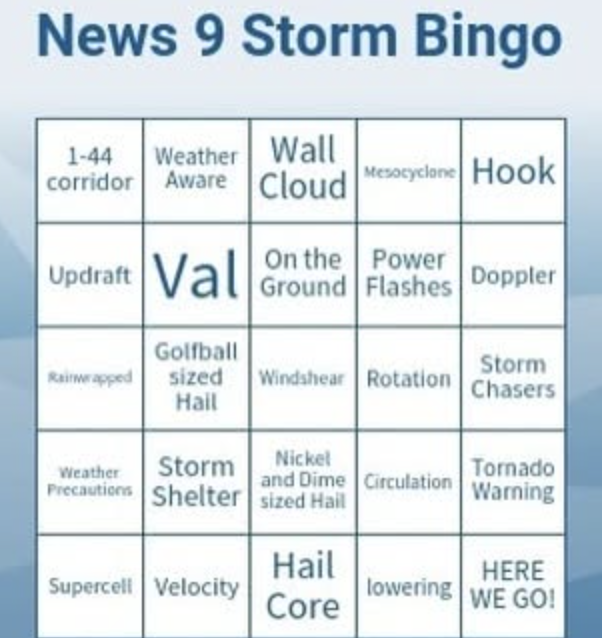
News 9 Bingo
When a tornado watch or warning is issued, turn on your local news. Oklahoma meteorologists will track storms in real time, show you exactly where rotation is, and tell you which communities are in the path. This information is specific, updated constantly, and genuinely lifesaving.
2. Know Your Safe Space
Every Oklahoma home should have a designated shelter space. In order of preference:
A storm shelter or safe room — the safest option. If your home does not have one, I strongly recommend looking into having one installed. I partner with My Oklahoma Storm Shelter and can help you get $500 off a shelter certificate.
An interior room on the lowest floor — a bathroom, closet, or hallway away from windows
Under a staircase — another solid interior option
Make sure every person in your household knows where to go and how to get there quickly, especially at night.
3. Build Your Emergency Kit
Keep these supplies in or near your shelter space:
Flashlight and extra batteries (or a hand-crank flashlight)
Battery-powered or hand-crank NOAA weather radio
Water and non-perishable snacks
A phone charger and backup battery pack
Copies of important documents in a waterproof bag
First aid kit
Medications you or family members need
Comfort items for children — a small stuffed animal, a familiar blanket
Hearing protection if you have children sensitive to loud sounds
For families with medical needs, seizure plans, or special equipment, I have a full emergency preparedness guide on my website that covers those specifics in more detail.
4. Have a Communication Plan
Decide in advance:
Where will your family meet if you are separated?
Who is the out-of-state contact everyone will check in with?
How will you reach children at school?
What is the plan if a storm hits during work hours?
Schools in Oklahoma practice tornado drills and have shelter protocols.If you don't know them you can ask and the school will provide this information. Knowing the plan in advance means one less thing to figure out under pressure.
Understanding the Difference: Watch vs. Warning
This is one of the most important things to learn when you move to Oklahoma:
Tornado Watch — Conditions are favorable for tornadoes to develop in the area. Stay aware, monitor weather, and be ready to act. You do not need to take shelter yet, but you should be paying attention.
Tornado Warning — A tornado has been spotted or indicated by radar in your area. Take shelter immediately. Do not wait to see it.
The way I personally remember: watch means you are thinking about tacos for dinner. Warning means tacos done and at the table.
When a warning is issued for your location, move to your shelter space now.
A Few Things Not to Do
Do not try to outrun a tornado in your car unless you have significant time and a clear escape route. Modern tornado paths are tracked well, but they are unpredictable at close range. Believe me we have tired to do this, it was not good, we wont do it again.
Do not shelter under an overpass. This is a common misconception that has cost lives. Overpasses actually funnel wind and debris dangerously. Get low and inside.
Do not ignore a warning because "it's probably nothing." Oklahoma meteorologists do not issue tornado warnings lightly.
Do not wait until tornado season to prepare. Build your kit and know your shelter space before the season begins.
Living Here With Children and Special Needs Families
Tornado preparedness can feel especially heavy if you have children who struggle with anxiety, sensory sensitivities, autism, or medical conditions.
A few things that help:
Practice going to the shelter space during calm weather so it feels familiar and safe, not scary
Keep comfort items in the shelter: familiar snacks, headphones, a favorite toy
Use simple, calm language when talking about storms with children. "We have a safe place to go" is more helpful than dwelling on danger.
Let children participate in building the emergency kit: it gives them ownership and reduces anxiety
Create visual schedules or picture cards if your child uses them
My emergency preparedness page goes deeper on this, it was written specifically with families navigating medical needs and special circumstances in mind.
The Part People Do Not Talk About Enough
Oklahoma communities come together after storms in a way that is genuinely remarkable.
There is a term people around here use, the Oklahoma Standard, and it refers to the way Oklahomans show up for one another in difficult moments. After a significant storm, neighbors are out helping neighbors before emergency services can even reach everyone. Strangers bring food and water. Communities organize cleanup crews within hours.
That spirit is real. I have seen it, I lived it in 2013. It is part of why people who move here for jobs or family often end up staying, not because the weather is perfect, but because the community is. I learned it for myself, the experience is the reason I will raise my children in Oklahoma.
Choosing to live in Oklahoma means choosing to live among people who take care of each other.
That matters more than you can know.
The Bottom Line
Oklahoma tornado season deserves respect, not fear. With the right preparation, a shelter plan, a weather radio, an emergency kit, and a communication plan, you can feel genuinely confident about keeping your family safe.
Thousands of families move to Oklahoma every year and build full, wonderful lives here. The weather is part of the story, not the whole story.
If you have questions about finding a home with a storm shelter, preparing a rural property for severe weather, or anything else about life in Oklahoma, I am always happy to talk. This is home for me, and I love helping other people make it home too.
With a Sprinkle of Lime… thoughtfully guiding you home.
Susan Honaker | Susan at Lime | Lime Realty 📞 405-436-3165 🌐 susanatlime.com 🌐 Emergency Preparedness Resource: susanatlime.com/emergency-preparedness-for-oklahoma-families 🏠 $500 Off Storm Shelter Certificate: stormshelter.susanatlime.com
This post is intended for general educational purposes. Always follow guidance from local emergency management officials and the National Weather Service during severe weather events.