
Understanding Seller Disclosures: A Homebuyer's Guide
Real Estate Tips, Seller Disclosure, Home Buying Advice, Property Insights
How to Read Between the Lines of a Seller Disclosure
A friendly, step-by-step guide to understanding what a Seller Disclosure really says about a home, so you can make confident decisions in your Oklahoma home search.
⚠️ Important Note: The information in this article is for general educational purposes only and is not legal, financial, or tax advice. Seller disclosure rules can change and may vary based on your specific situation. Always consult with your real estate professional, attorney, and other qualified advisors before making decisions about a particular property.
What Is a Seller Disclosure and Why Does It Matter?
When you fall in love with a home, it is easy to focus on the pretty kitchen, the big backyard, or the perfect commute. One of the most important pieces of paper in your entire home purchase is the Seller Disclosure. This document is a key part of smart home buying advice because it offers a written snapshot of what the seller knows about the property’s condition, history, and any problems that may exist.
In Oklahoma, sellers are generally required to disclose known material defects and certain conditions that could affect your decision to buy. That does not mean the Seller Disclosure is a guarantee that nothing is wrong. Instead, it is a starting point for your disclosure analysis and your overall property insights as you decide whether this home is right for your family. Think of it as a conversation opener between you, the seller, your inspector, and your real estate agent, not the final word on the home’s condition.
💡 Friendly Reminder: A Seller Disclosure does not replace a home inspection. It is one tool in your toolkit, and a good agent, helps you use it wisely alongside inspections and other real estate tips.
The Goal: Reading Disclosures Like a Pro, Not a Detective
Many buyers feel nervous when they first see a long Seller Disclosure. All those boxes, questions, and tiny notes can feel overwhelming. The good news is, you do not have to turn into a private investigator overnight. You just need a calm, structured way of reading disclosures and a partner who can help you ask good questions. That is where a relationship-focused agent, can make a big difference, no pressure, just clear explanations and honest guidance for your family’s situation in the Oklahoma City Metro and surrounding communities.
In this guide, we will walk through how to read between the lines of a Seller Disclosure so you understand what is being said, what might be left unsaid, and how to respond in a calm, informed way. We will cover practical real estate tips, common red flags, and the subtle clues that can help you spot future headaches, or feel even more confident about moving forward with an offer.
First Pass: How to Read a Seller Disclosure from Top to Bottom
Before you start circling things and worrying about what might be hiding, give the Seller Disclosure a slow, steady first read from top to bottom. This first pass is about getting familiar with the overall story of the home. Here is a simple step-by-step approach you can use with any property, whether you are a first-time buyer or a seasoned homeowner looking for your next chapter in the OKC Metro area:
Check the basics. Look at the property address, year built, and how long the seller has owned the home. Long-term owners may know more history; recent owners may have limited knowledge but might have done recent updates. These basics are your first layer of property insights.
Notice the pattern of “Yes,” “No,” and “Unknown.” A page full of “No” answers is not automatically good or bad. What matters is whether the pattern makes sense for the age and type of home and whether anything feels inconsistent with what you have seen in person or in photos.
Highlight anything that mentions water, foundation, roof, electrical, or plumbing. These are the “big ticket” systems that can be expensive to repair. As you work through your disclosure analysis, you will want to pay special attention to these areas.
Look for dates. When were the roof, HVAC, water heater, or major systems last replaced or serviced? Dates give you a timeline and help you plan for future maintenance costs, an important piece of realistic home buying advice.
📌 Key Takeaway: Your first read-through is about the big picture, not panic. You are simply gathering information and noticing patterns so you can ask calm, specific questions later.
Reading Between the Lines: What “Yes,” “No,” and “Unknown” Really Mean
On most Seller Disclosure forms, the seller checks boxes for “Yes,” “No,” or sometimes “Unknown” for different questions. It might feel like a simple checklist, but there is more going on beneath the surface. Here is how to interpret these answers as part of your deeper disclosure analysis.
When the Seller Checks “Yes”
A “Yes” answer usually means there has been an issue, repair, update, or condition the seller is aware of. This does not automatically mean you should walk away. In fact, a clear “Yes” with good notes can be a sign of transparency and integrity, values that I believe in deeply. Here is how to read those “Yes” answers:
Is there a brief explanation or date? “Roof leak in 2019, repaired by licensed roofer, no issues since” is very different from a simple “Yes” with no details. The more clear the explanation, the easier it is to evaluate during inspections.
Has the issue been resolved, monitored, or ignored? A note that says “ongoing seepage in heavy rains” tells you this may be an active concern. That is a flag to bring up with your inspector and your agent so you understand the potential cost and risk.
When the Seller Checks “No”
A “No” answer means the seller is stating they are not aware of that specific problem or condition. Most boxes will be “No,” and that is normal. The key is to notice when a “No” feels surprising based on what you see during showings or in photos. For example, if you see cracks in walls or sloping floors but the foundation section is all “No,” that is worth a closer look and a conversation with your agent and inspector. This is where smart reading disclosures goes beyond just trusting the form at face value.
When the Seller Checks “Unknown”
“Unknown” can feel unsettling, but it is often an honest answer. Maybe the current owner has only lived in the home a short time, or they bought it as an investment and do not know the full history. In some cases, they truly do not know whether a past issue occurred. “Unknown” is your cue to rely more heavily on inspections, third-party reports, and your agent’s property insights about the neighborhood, age of the home, and typical issues in that area of the Oklahoma City Metro.

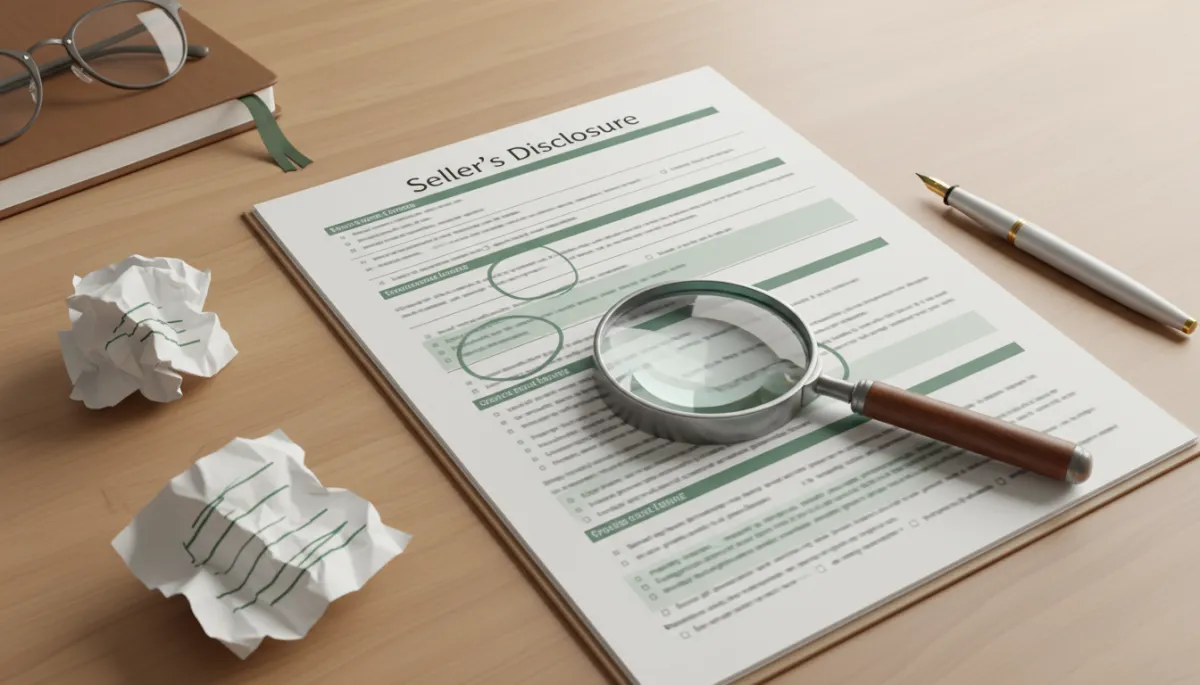
Taking notes on your Seller Disclosure helps you ask clear, confident follow-up questions.
Key Sections of a Seller Disclosure to Pay Extra Attention To
While every part of the Seller Disclosure matters, some sections have a bigger impact on your budget, safety, and long-term comfort. Here are the areas where careful disclosure analysis can really pay off in peace of mind and financial protection.
1. Roof and Exterior
In Oklahoma, storms, hail, and strong winds are part of life. The roof section of the Seller Disclosure is especially important. Look for:
The age of the roof and any known leaks or repairs
Whether there have been insurance claims for hail or storm damage
Notes about gutters, siding, and exterior drainage
A roof nearing the end of its typical lifespan is not a dealbreaker, but it is something to budget for. A trusted agent like me can help you weigh the cost of a future roof replacement against the overall value of the property and your long-term plans.
2. Foundation, Structure, and Drainage
Foundation issues can be expensive to repair, and Oklahoma soil conditions can sometimes contribute to settling or movement. On the Seller Disclosure, look for:
Any mention of cracks, movement, or previous foundation repairs
Notes about standing water, drainage problems, or grading issues around the home
Again, a “Yes” is not automatically bad news. Many homes have had minor settling or small repairs. The key is to understand the scope of the issue, see any documentation, and involve a qualified inspector or structural engineer when needed. This is where thoughtful, low-pressure home buying advice really matters so you do not overreact, or underreact, to what you see on paper.
3. Water, Plumbing, and Past Leaks
Water is one of the most common sources of long-term damage in a home. Pay close attention to any mention of:
Past leaks under sinks, in ceilings, around windows, or in the crawlspace
Sewer line issues or backups
Water in the basement or under the home during heavy rains
Ask: Was the source of the leak fixed, or was the damage just “patched” cosmetically? Did they replace damaged materials and address the cause, or simply paint over stains? This is a perfect example of where reading between the lines of a Seller Disclosure helps you know what to ask during your inspection period.
4. Electrical, HVAC, and Major Systems
Your comfort and safety depend heavily on the home’s major systems. On the Seller Disclosure, look for:
The age and type of HVAC system, water heater, and electrical panel
Any known issues, frequent repairs, or problems keeping the home comfortable in extreme weather
Even if everything is currently working, older systems may be nearing the end of their typical lifespan. A friendly, realistic agent, can help you weigh the cost of future replacements against your budget and timeline so you do not feel caught off guard a year or two after closing.

Pairing the Seller Disclosure with a thorough inspection gives you a fuller picture of the home.
Subtle Clues: What the Seller Disclosure Might Be Hinting At
Sometimes, the most helpful property insights come from what is not written plainly. Here are a few subtle clues to watch for when you are reading disclosures and trying to understand the real story of a home.
Vague language. Phrases like “small issue,” “minor crack,” or “sometimes” without more detail can be a sign to ask follow-up questions. You deserve clear, specific information so you can make a confident decision.
Lots of recent repairs right before listing. Fresh paint, new flooring, or recent patchwork can be wonderful updates or cosmetic cover-ups. Your agent and inspector can help you tell the difference and decide what it means for your offer and negotiations.
Inconsistencies with what you see. If the Seller Disclosure says “No known roof leaks,” but you notice stains on ceilings, that is a clear sign to dig deeper. This does not mean someone is lying; it may mean they truly did not know, or the issue was recent. Either way, it is worth addressing calmly and directly.
💡 Pro Tip: Keep a simple list of “Questions for My Agent and Inspector” as you read. This keeps you focused on solutions instead of stress and helps your team support you more effectively.
How Seller Disclosures Fit into Your Bigger Home Buying Strategy
A Seller Disclosure is just one piece of the puzzle. To truly protect your family and your budget, you want to combine it with other smart real estate tips and resources. Here is how this document fits into your overall plan when you work with a relationship-first agent like myself, Susan Honaker | Susan at Lime in the Oklahoma City Metro and surrounding communities.
Pairing the Disclosure with a Quality Home Inspection
The Seller Disclosure tells you what the seller knows. A home inspection helps reveal what might be happening behind the walls, under the floors, and in the attic. When you give your inspector a copy of the disclosure ahead of time, they can pay extra attention to areas where the seller has reported issues or where there are suspicious gaps. This is one of the most practical pieces of home buying advice I share with buyers: let your professionals talk to each other through the paperwork, so you do not have to carry the burden alone.
Using the Disclosure in Negotiations ~ Without Drama
If your disclosure analysis and inspection reveal concerns, you may choose to negotiate repairs, credits, or price adjustments. A thoughtful agent will help you:
Prioritize safety and major systems over cosmetic items
Decide what is reasonable to request in your local market conditions
Communicate with the seller’s side in a calm, respectful way that keeps the deal on track when possible
At Susan at Lime, the focus is on advocacy with kindness, protecting your interests without unnecessary conflict. That approach reflects the brand’s values of integrity, transparency, and putting relationships first.
A supportive agent helps you turn confusing disclosures into clear next steps.
Common Myths About Seller Disclosures
As you talk with friends, family, or read online, you might hear some confusing things about Seller Disclosures. Let us clear up a few myths with straightforward real estate tips you can trust.
Myth: “If the Seller Disclosure looks clean, I do not need an inspection.” Truth: Even honest sellers cannot disclose what they do not know. Inspections reveal hidden issues and give you more complete property insights.
Myth: “If there is anything bad on the disclosure, I should walk away.” Truth: Many older homes have a history of repairs. The key is understanding the scope, quality of repairs, and how it fits your budget and comfort level.
Myth: “Sellers always hide things.” Truth: While not every seller is perfect, many genuinely try to be transparent. Working with an agent who values integrity, helps you navigate the gray areas with wisdom instead of fear.

Combining disclosures, inspections, and expert guidance helps you see the full financial picture.
Practical Steps for Buyers: A Simple Seller Disclosure Checklist
To bring all this home buying advice together, here is a simple, friendly checklist you can use the next time you receive a Seller Disclosure for a property you love in the Oklahoma City Metro or nearby communities:
Read the entire Seller Disclosure once without a pen in your hand. Just absorb the overall story of the home.
On your second read, highlight anything related to roof, foundation, water, electrical, plumbing, or HVAC.
Make a short list of questions for your real estate agent and your inspector. Keep the tone curious, not accusatory, you are gathering information, not building a case.
Compare what you read with what you have seen in person or online. Do they match? If not, add that to your question list.
Share the disclosure with your inspector before the inspection so they can focus on any areas of concern.
After inspection, sit down with your agent to review the disclosure and inspection together. Decide which issues are dealbreakers, which are negotiable, and which are simply part of owning a home of this age and style.
📌 Key Takeaway: You do not have to know everything about construction or law to be a smart buyer. You just need a clear process, good questions, and a trusted, relationship-focused guide by your side.

How Susan at Lime Supports You Through Disclosure Analysis
At Susan Honaker | Susan at Lime, Seller Disclosures are never treated as “just paperwork.” They are an opportunity to educate, advocate, and build trust with you and your family. Here is what that looks like in practical terms for buyers in the Oklahoma City Metro and surrounding communities:
Walking through the Seller Disclosure with you line by line, in plain language, so you understand what each section means and how it affects your decision.
Offering local context: such as how common certain issues are in your chosen neighborhood or with homes of a similar age or style in Oklahoma.
Connecting you with trusted inspectors, contractors, and other professionals when you need deeper evaluations or cost estimates.
Helping you decide when to negotiate, when to walk away, and when a home’s history is actually a sign of good maintenance and care.
Most of all, my approach is grounded in kindness, transparency, and service. You are never pushed into a decision or made to feel rushed. Instead, you are given clear information, gentle guidance, and the space to choose what is best for your family’s next chapter, whether you are a first-time buyer, growing family, empty nester, or relocating to the OKC area.
Ready to Feel Confident Reading Seller Disclosures?
Understanding how to read between the lines of a Seller Disclosure is one of the most empowering skills you can bring to your home search. When you know how to interpret “Yes,” “No,” and “Unknown,” spot subtle clues, and pair the disclosure with inspections and expert guidance, you are far less likely to feel blindsided after closing and far more likely to feel peaceful and prepared as you move into your new home.
If you are planning to buy or sell in the Oklahoma City Metro or surrounding communities and want a real estate partner who values relationships, education, and advocacy, I would love to connect. Whether you are just starting to dream, actively house-hunting, or preparing to list your current home, you are welcome to reach out with questions about Seller Disclosures, inspections, or any other part of the journey.
You can schedule a friendly consultation, request a home valuation, search current listings, or download buyer and seller guides designed to make each step feel less overwhelming and more manageable. You can also join Susan’s VIP Buyer or Seller Program for ongoing real estate tips, community updates, and local resources that support your family well beyond closing day.
However you choose to move forward, remember this: you do not have to decode Seller Disclosures alone. With the right support, those pages of checkboxes and notes become a helpful roadmap, not a reason to worry. With a trusted advocate by your side, you can move into your next home in Oklahoma with clarity, confidence, and a sense of peace about the decision you have made.
Reach out anytime, no pressure, just honest answers.
405-436-3165
[email protected]
Get Your Free Moving to Oklahoma Guide:
https://susanatlime.com/moving-to-oklahoma-relocation-guide
Get Your Free Listing Launch System:
https://susanatlime.com/seller/launch/system
Get Your Free Buyer Roadmap:
https://susanatlime.com/home-buying-roadmap
Susan Honaker, REALTOR® | Lime Realty
Serving Spencer, Nicoma Park, Jones, Arcadia, Harrah, Edmond, OKC, Choctaw, Moore, Yukon, Mustang & the greater OKC metro.
Susan At Lime